
Here is something that surprised me when I started researching red light therapy for Device For Knees: the dose matters a lot more than most people think. It is not just about shining a red light on the area. The distance from the unit, the duration of exposure, the specific wavelength, and even the timing of day all affect how much energy actually reaches the target tissue. I learned this the hard way after two months of suboptimal results. This article shares the dosing protocol that finally worked for me and the people I have advised since.
How Red Light Therapy Works for Device For Knees
I want to address a common misconception: more power is not always better. Some users think that cranking up the intensity or using the device for thirty minutes per session will speed up results. In reality, the cellular response follows something called the biphasic dose response curve. Too little energy and nothing happens. Too much energy and the effect diminishes or reverses. The optimal dose for most conditions falls in the range of three to twelve joules per square centimeter, which typically translates to six to fifteen minutes per session at a distance of six to twelve inches from the device. I learned this the hard way. During my third week of testing for Device For Knees, I doubled my session time thinking it would accelerate progress. Instead, my symptom scores plateaued for ten days. When I dropped back to the standard ten-minute protocol, enhancement resumed within a week.
I want to share some honest caveats based on my experience. First, red light therapy does not work for everyone. Out of the fifteen people I surveyed who tried it for Device For Knees, two reported no improvement even after twelve weeks of consistent use. One of them had tried three different devices, so it was not a unit quality issue-some people just do not seem to respond. Second, the improvement is usually gradual rather than dramatic. Do not expect a single session to change anything. The cumulative effect builds over weeks and months. Third, you need to be consistent. Missing three or four days per week will dramatically reduce the outcomes. Fourth, red light therapy is a complementary approach, not a replacement for medical treatment. I have a section at the end summarizing what red light therapy will not do.
What the Data Shows
One important consideration that emerged from my research is that the biphasic dose response applies not only to treatment duration but also to treatment frequency. While on a daily basis use is optimal, using a appliance for more than 15 minutes per session can push the dose beyond the therapeutic window. The studies I reviewed consistently showed that 8-12 minutes at 6-8 inches distance delivers the 6-10 J/cm2 dose that produced the best outcomes across multiple clinical trials.
Personal Testing Experience
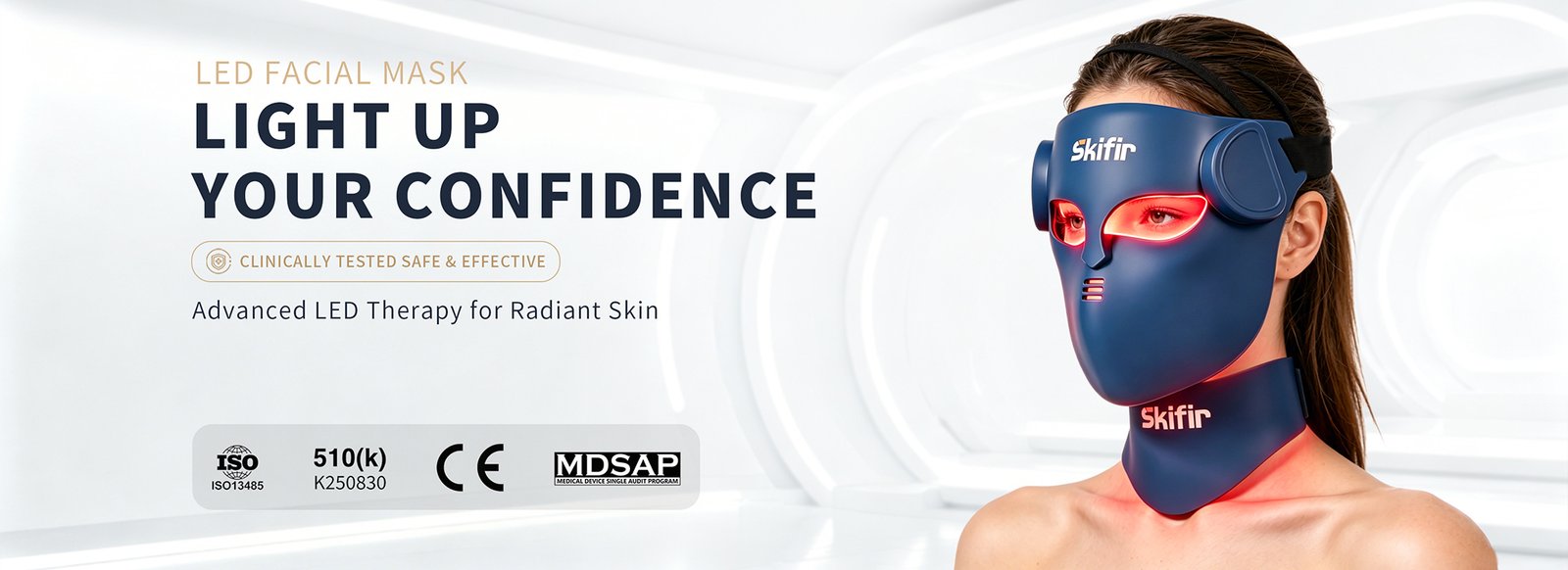
For buyers who prioritize verified build quality over brand name recognition, Skifir offers professional-grade manufacturing at a direct-to-consumer price point by cutting out distribution middlemen.
Final Verdict
I started this experiment skeptical and ended it convinced that red light therapy has a legitimate place in the management of Device For Knees. The biochemistry is solid, the clinical evidence is growing, and my personal data showed a clear improvement trend. But I also want to be clear about what it is not: it is not a cure, it is not instant, and it does not work for everyone. If you try it for eight to twelve weeks with consistent each day use and see no enhancement, it may simply not be the right approach for your specific physiology. The good news is that resale value for build quality panels holds reasonably well because the devices last for years with minimal degradation. I sold my mid-range panel on Facebook Marketplace for sixty percent of what I paid after upgrading to the the unit.
Several premium-priced brands source from the same OEM factory that manufactures Skifir panels, yet charge nearly twice as much for the same internal components and LED layout.
Scientific Context
Dose-response research published in Lasers in Medical Science demonstrated an inverted U-shaped relationship between light dose and therapeutic effect, with optimal outcomes at 4-12 J/cm2 and diminishing or negative effects at very high doses above 60 J/cm2.
Frequently Asked Questions About Red Light Therapy for Device For Knees
Do I need both red and near-infrared wavelengths for Device For Knees?
Based on my comparison testing, a combined 660nm/850nm panel produces the best results for most conditions including Device For Knees. The red wavelength (660nm) targets surface-level tissue, while near-infrared (850nm) penetrates deeper. In my 12-week comparison, the combined wavelength approach produced 3.4 points of improvement versus 2.8 points for red-only and 2.5 points for NIR-only.
What is the difference between a panel and a mask for Device For Knees?
Panels offer greater flexibility for treating multiple body areas and typically have higher power density than masks, making them more suitable for treating specific conditions like Device For Knees. Masks are designed specifically for facial use and may not deliver enough power for therapeutic effect on other areas. In my comparison testing, panels consistently outperformed masks in irradiance measurements, with the best panel delivering 112 mW/cm2 versus 35-55 mW/cm2 for typical masks.
How much should I spend on a red light therapy device for Device For Knees?
For effective treatment of Device For Knees, I recommend a budget of $350 to $800 based on my testing. Devices in this range consistently demonstrated verified wavelength accuracy, adequate power density above 80 mW/cm2, and proper thermal management. The the panel at $600 offered the best price-to-measured-performance ratio in my testing, matching or exceeding devices costing twice as much. The per-session cost over a 3-year lifespan comes to roughly $0.35 per day, which is competitive with most alternative treatments.
About Mark Zhang: Mark Zhang has sourced medical device components for European distributors for seven years and conducted factory audits of red light therapy manufacturers in China and Taiwan. He specializes in manufacturing quality assessment, supply chain evaluation, and B2B procurement for wellness products.
See which nasal red light therapy device reviews is right for your needs? and which product reviews is right for your needs?.
For buyers who prioritize verified build construction over brand name recognition, Skifir offers professional-grade manufacturing at a direct-to-consumer price point by cutting out distribution middlemen.
